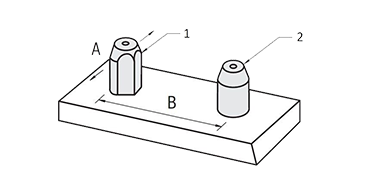
How do you determine the size of a pipe thread?
In order to determine the size of a pipe thread, you must first take a closer look at the differences between inch threads and metric threads:
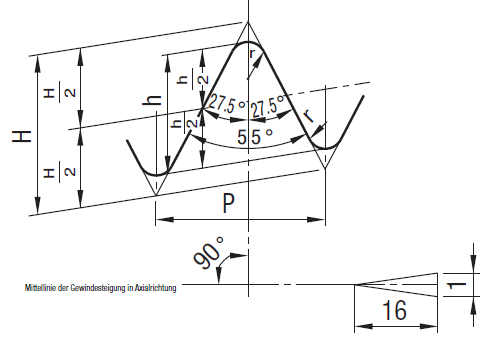
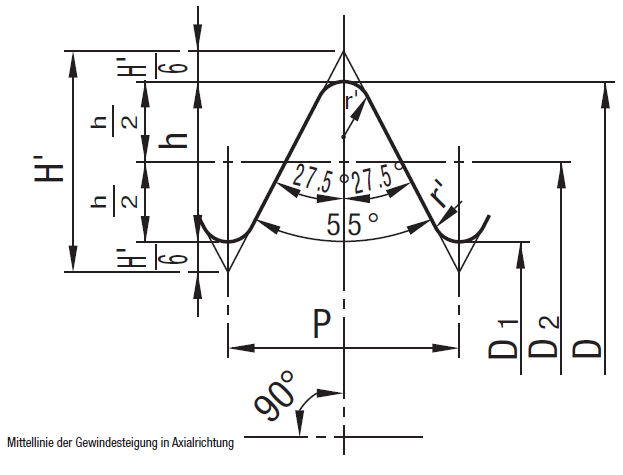
The following parameters apply to metric threads:
- Thread diameter: For metric threads, the diameter of the thread is measured in millimetres (mm). This diameter is often referred to as the “nominal diameter” and is the key measure for metric threads. If a metric thread has a nominal diameter of 10 mm, for example, the external diameter of the thread is also 10 mm.
- Thread pitch: The thread pitch indicates how many threads per millimetre are present. A thread pitch of 1.5 mm means, for example, that there are 1.5 threads per millimeter. The thread pitch determines the fineness of the thread.
The thread pitch is also specified for inch threads. Here, however, it refers to the number of threads per inch. Another important characteristic for inch threads is the length measurement. This refers to the physical length of the thread or pipe measured in inches (or fractions of inches). This measure indicates how long the thread or pipe is in its entirety, regardless of the number of threads. A pipe with a length measurement of 6 inches can, for example, have a physical length of 6 inches, regardless of the number of threads.
It should be noted that the actual size of a pipe may vary slightly from the nominal width, especially in old pipes or in different countries with different standards.
When converting from inches to the metric system, the following values apply:
- 1.00 inch = 2.54 cm = 25.4 mm